
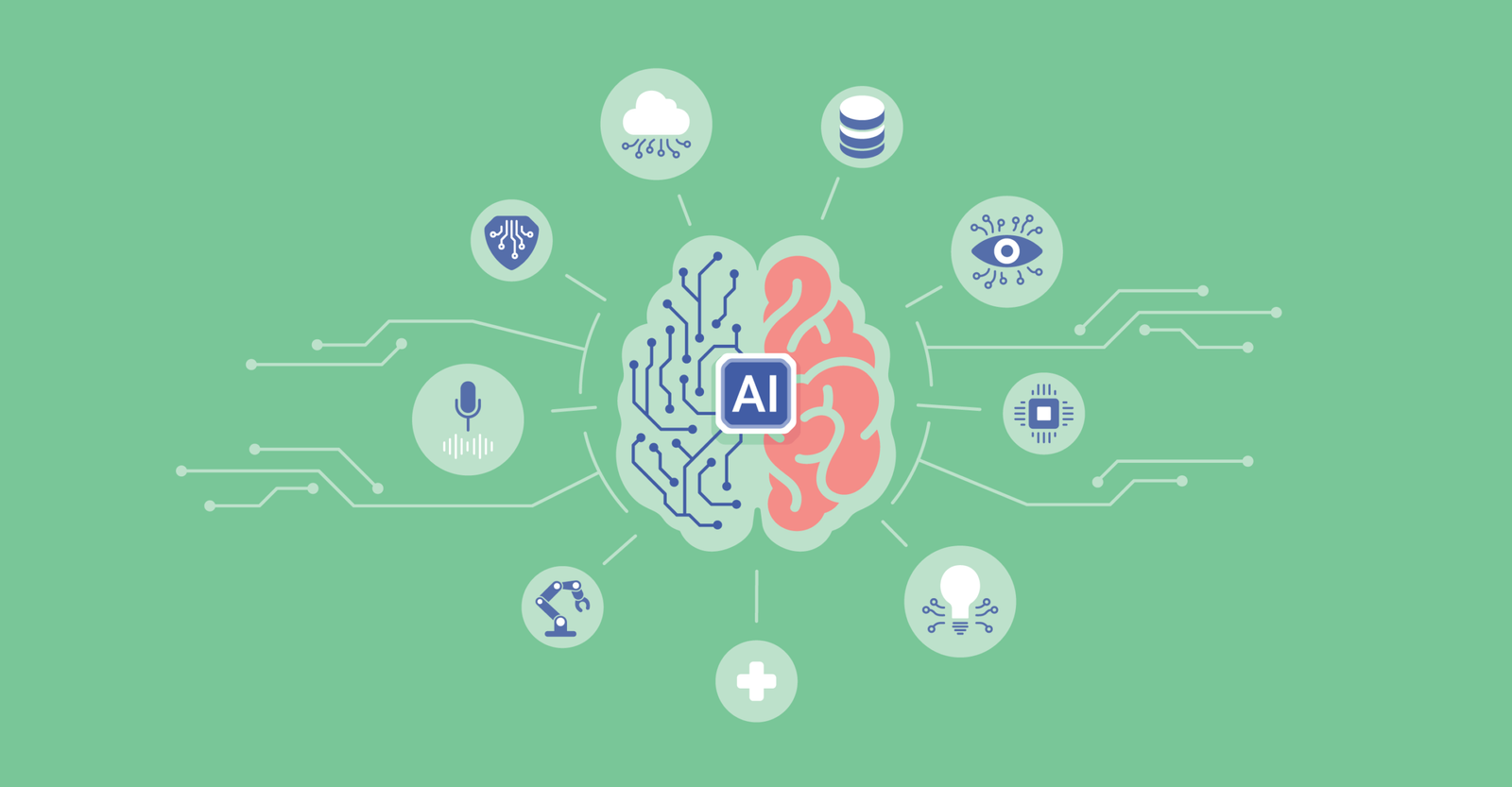
What is artificial intelligence and how does it work?
Artificial intelligence is everywhere. In Spotify suggesting songs, in Google translating
text, in your bank detecting fraud, in Instagram deciding what shows up in your feed. But
despite being so present, few people actually understand what AI is and how it does what
it does.
Let’s demystify this in a straightforward, no-nonsense way.
What is artificial intelligence?
AI is, at its core, a field of computing that creates systems capable of performing tasks
that previously required human intelligence: recognizing images, understanding
language, making decisions, learning from experience.
Unlike a traditional computer program — which follows fixed rules programmed by a
human — AI systems learn patterns from data. Instead of specifying exactly what to do
in every situation, you show thousands of examples and the system figures out the rules
on its own.
Machine learning: learning from data
Machine learning is the heart of modern AI. The idea is simple in theory: you feed a
system many examples — say, thousands of photos of cats and dogs with the correct
labels — and the algorithm finds patterns that allow it to correctly classify new photos.
The more data and the better the quality of that data, the more capable the system
becomes. That’s why companies like Google and Meta, with access to enormous
amounts of user data, can build exceptionally powerful AI systems.
Neural networks: inspired by the brain
Artificial neural networks are a machine learning structure inspired — in a very simplified
way — by how the human brain works. They consist of layers of artificial “neurons” that
process information, passing it forward and adjusting connections based on the mistakes
they make.
Deep learning uses neural networks with many layers (hence “deep”). It’s what enables
voice recognition, automatic translation, and the text generation that large language
models do today.
Generative AI: creating content
Generative AI — like ChatGPT, Gemini, or Claude — is a specific type of AI trained on
enormous amounts of text to learn the patterns of human language. It doesn’t understand
in the human sense, but it can generate coherent, useful text by predicting, word by word,
what the most likely continuation of a sequence is.
It’s impressive technology, but it has real limitations: it can make mistakes, hallucinate
information, and lacks genuine critical thinking.
Why does this matter to you?
Having a basic understanding of how AI works helps you use these tools more
intelligently, question the results they produce, and avoid delegating important decisions
without reviewing them. AI is a tool, not an oracle.