
How AI is transforming medicine
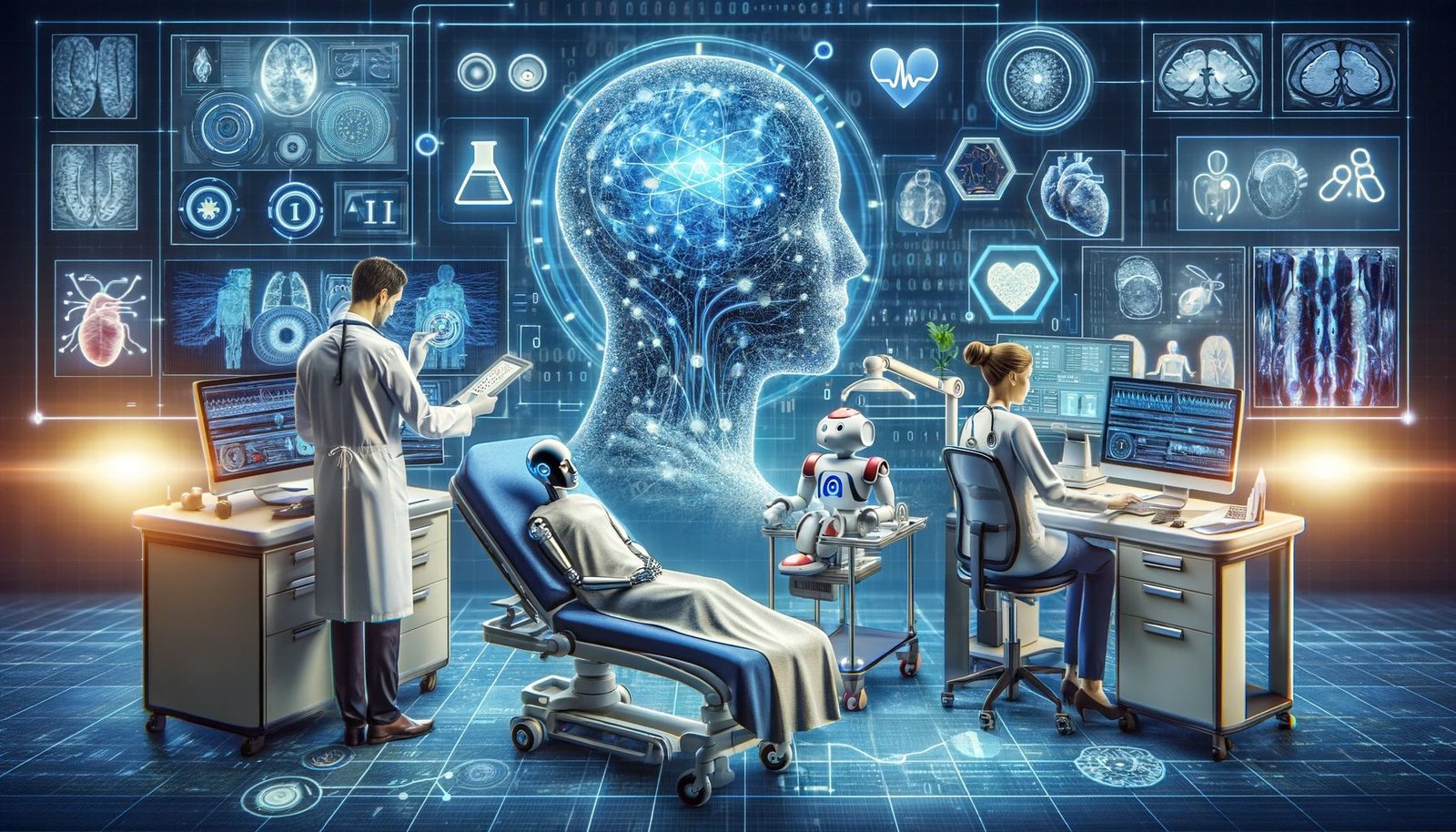
Medicine is one of the fields where artificial intelligence is having the most concrete and
immediate impact. This isn’t science fiction — it’s already happening in hospitals, clinics,
and laboratories around the world.
And the possibilities are genuinely exciting.
Medical imaging: AI sees what the human eye can miss
One of the most advanced applications is medical image analysis. AI systems trained on
millions of X-rays, CT scans, and MRIs can identify tumors, lung nodules, diabetic
retinopathy, and other conditions with accuracy that competes with — and sometimes
surpasses — human specialists.
This doesn’t mean the doctor becomes unnecessary. It means AI acts as a tireless
second pair of eyes that doesn’t get fatigued after reviewing the tenth scan of the day and
doesn’t have bad days. The doctor then applies clinical context, talks with the patient, and
makes the final decision.
Drug discovery: years become months
Developing a new drug traditionally takes 10 to 15 years and costs billions of dollars.
Much of that time goes toward identifying candidate molecules that might have
therapeutic effect.
AI is radically changing this. Systems like Google DeepMind’s AlphaFold solved a 50
year-old problem — predicting protein structures — with unprecedented accuracy. This
dramatically accelerates the identification of new drug targets.
During the COVID-19 pandemic, AI was used to identify treatment candidates in weeks,
rather than years.
Personalized medicine
Every patient is unique — genetics, history, lifestyle. Traditional medicine treats
conditions with general protocols. AI makes it possible to analyze the genomic profile of
a cancer patient and identify which specific treatment is most likely to work for that
particular profile.
Monitoring and prevention
Wearable devices — smartwatches and similar — continuously collect data on heart rate,
blood oxygen saturation, and sleep patterns. AI algorithms analyze this information and
can detect cardiac irregularities, predict falls in elderly patients, and identify early warning
signs of health deterioration.
The challenges that can’t be ignored
Privacy of health data is a critical concern. Algorithmic bias — when models are trained
predominantly on data from certain population groups — can result in less accurate
diagnoses for other groups. And the doctor-patient relationship, built on trust and human
empathy, has a value that no algorithm can replace.
AI in medicine is an extraordinary tool. But a tool that requires qualified professionals to
operate it responsibly.