
Does RAM Matter in a Phone? What Really Affects Your Smartphone’s Performance
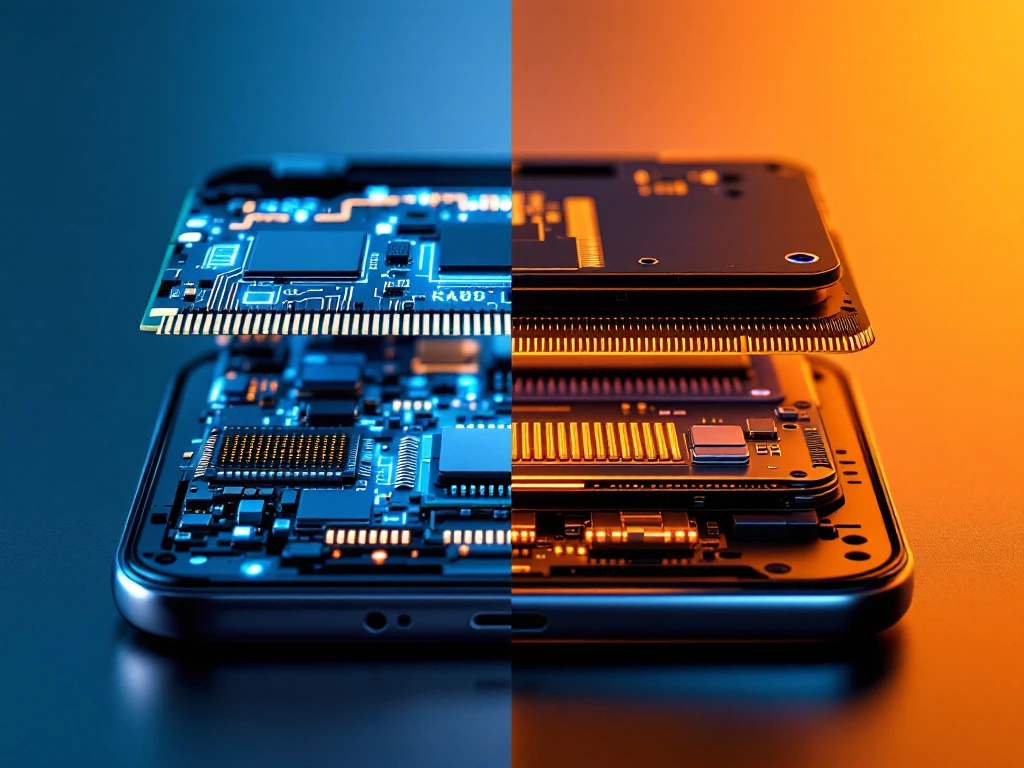
It’s common to see smartphone specs listing 12 GB, 16 GB, or even 24 GB of RAM. But does all that memory actually make a real difference in everyday use? The answer is more nuanced than the marketing industry typically presents, and it requires understanding how mobile operating systems manage resources in fundamentally different ways than desktop computers.
RAM in smartphones primarily serves to keep background apps ready for immediate use, preventing slow reloads. When you switch between WhatsApp and Instagram, for example, the system keeps both apps in memory so the transition is instantaneous. With less RAM, the OS needs to terminate apps more quickly to free up space, causing frequent reloads.
However, there is a point of diminishing returns. Modern Android, especially with optimizations introduced in version 12 and later, manages memory very efficiently. In practice, for typical use involving social media, web browsing, email, and productivity apps, 8 GB of RAM is sufficient for a smooth experience. The perceived benefits of going from 8 GB to 12 GB are marginal for most users.
What actually impacts perceived performance is the speed of the RAM, not just the quantity. The difference between LPDDR4X and LPDDR5X is significant: LPDDR5X offers transfer speeds exceeding 8.5 Gbps per pin, with up to 20% lower power consumption. This translates to faster read and write operations, quicker loading of game assets, and snappier app launches.
Another frequently overlooked factor is the type and speed of internal storage. Devices with UFS 3.1 or UFS 4.0 have sequential read speeds above 2,000 MB/s, while older options with eMMC fall below 400 MB/s. Since the OS uses storage as virtual memory when physical RAM is insufficient, having fast storage mitigates the negative effects of limited RAM.
Software management is also a key differentiator. Apple’s iOS has historically operated with less RAM than equivalent Android devices while still delivering a smooth experience. The iPhone 16 Pro comes with 8 GB of RAM while Android competitors offer 12 or 16 GB. This is because iOS has stricter control over how third-party apps use background memory, and Apple’s LLVM compiler generates highly optimized code.
For power users who run emulation, edit 4K video on-device, or run multiple graphically intensive gaming sessions simultaneously, 12 GB represents a real advantage. For everyone else, RAM is more of a marketing argument than a functional differentiator.
The technical conclusion is clear: when evaluating a smartphone, prioritize the quality and generation of RAM over raw quantity, and always consider the complete system, including processor, storage, and software optimization, to assess expected real-world performance.