
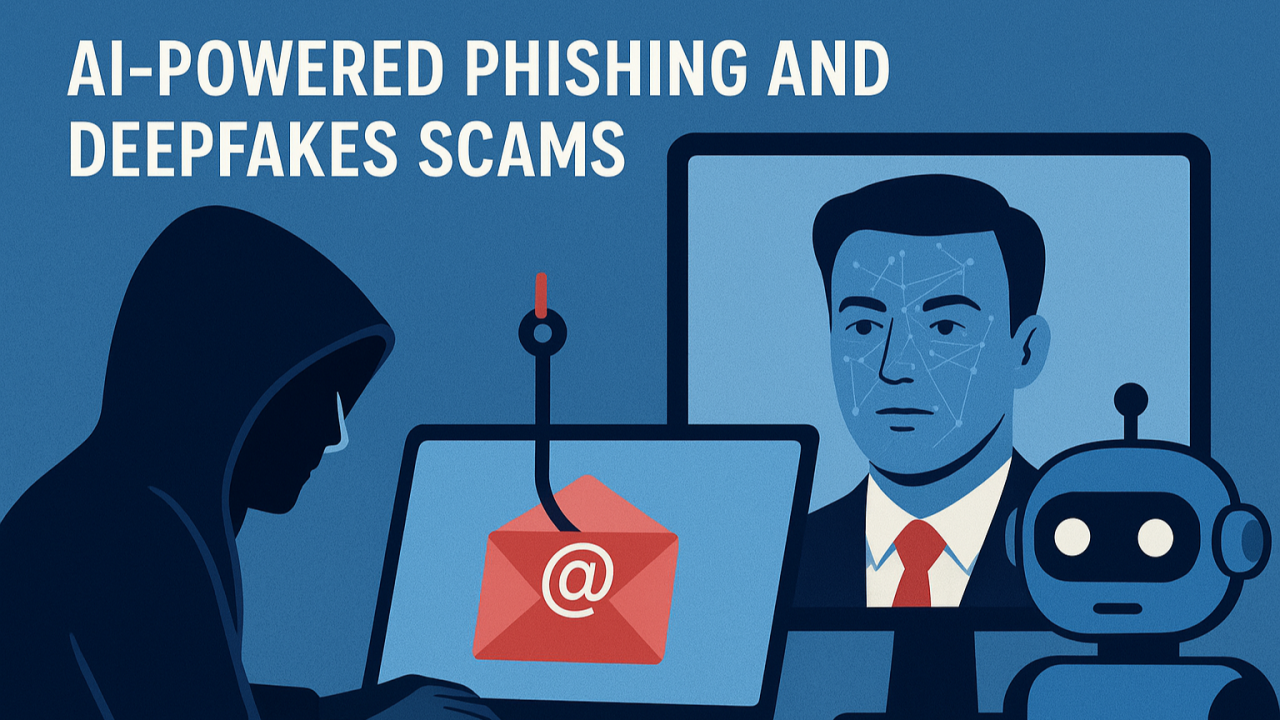
Deepfakes and AI-powered scams
In 2024, an employee at a company in Hong Kong was convinced to wire the equivalent of 25 million dollars after participating in a video call with who he believed was the company’s CFO and other colleagues. The problem: everyone on the call was a deepfake. Nobody was real.
If that sounds like an exaggeration, it’s because deepfakes have evolved from a technological curiosity into a sophisticated fraud tool at an alarmingly fast pace.
What is a deepfake?
A deepfake is content — video, audio, or image — created or manipulated by artificial intelligence to make it appear that a person said or did something that never actually happened. The technology uses deep neural networks to map and replicate someone’s face, voice, expressions, and mannerisms with a high degree of realism.
Creating a convincing deepfake, which used to require specialized hardware and hours of processing, can now be done in minutes by free apps.
How are deepfakes used for fraud?
The CEO scam: criminals clone an executive’s voice — collected from public videos on YouTube or LinkedIn — and call the finance department requesting an urgent wire transfer. Fast, simple, and frighteningly effective.
Political disinformation: fake videos of politicians saying things they never said, used to influence elections or spark diplomatic crises.
Extortion and sextortion: real people’s faces inserted into adult content, used as blackmail material.
Identity fraud: deepfakes being used to fool facial verification systems at banks and financial services.
How can you detect a deepfake?
The telltale signs still exist, though they’re getting increasingly subtle. Watch for: blinking that looks unnatural or is completely absent, slightly blurred edges around the face especially during movement, imperfect lip-sync, and inconsistent lighting on the face compared to the environment.
For audio, listen carefully for oddities in speaking rhythm, words cut off abruptly, or a slightly robotic quality to the voice.
Tools like Deepware Scanner can help analyze suspicious videos, though none are perfect.
What to do about it
The most effective defense against deepfake scams is protocol — not technology. If you receive a call from an executive requesting an urgent transfer, follow established procedures: call them back on their official number. No urgency justifies skipping verification steps.
For content you see online, cultivate healthy skepticism. Before believing and sharing a controversial video, look for confirmation from other reliable sources.