
Are Foldable Phones Worth It? Durability, Price, and the Future of Foldables
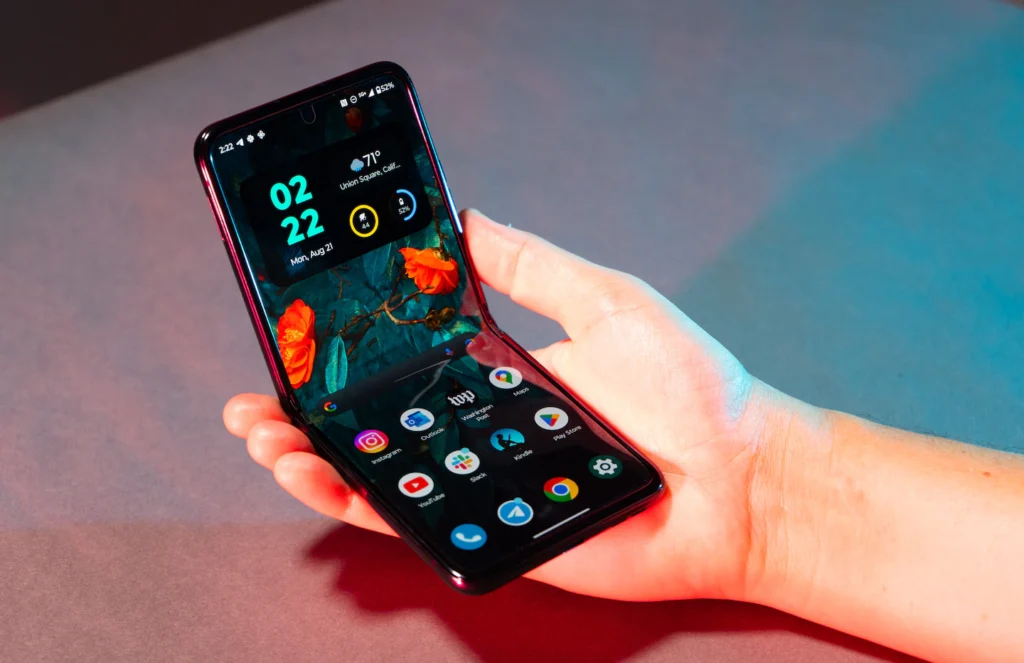
Foldable smartphones have moved from technological curiosity to an established product line. With the Samsung Galaxy Z Fold 7, Google Pixel 9 Pro Fold, and Motorola Razr+ 2025 available on the market, consumers have real options to consider. But the questions persist: is the technology mature enough? Is durability acceptable? And does the elevated price justify itself?
The main innovation of foldables is the flexible polymer plastic screen (UTG, Ultra-Thin Glass) that replaces conventional glass. The ultra-thin glass used in the latest generations is less than 100 micrometers thick, maintaining enough flexibility to withstand hundreds of thousands of fold cycles. Samsung certifies the Galaxy Z Fold 7 for 200,000 folds, equivalent to more than 100 daily folds for five years.
However, real-world durability presents nuances. The protective layer over the foldable display is more susceptible to scratches than the Gorilla Glass or Ceramic Shield found in conventional smartphones. Sharp objects, like keys in a pocket, can damage the surface easily. Additionally, the central hinge, the point of greatest mechanical stress, is the component most likely to fail over time, although manufacturers have significantly improved this weakness in recent generations.
Water resistance has also evolved. The Galaxy Z Fold 7 holds an IPX8 certification, allowing immersion in up to 1.5 meters of water for 30 minutes. The hinge sealing has been redesigned to better resist dust particles, although full IP certification (including dust resistance) is not yet available on all models.
From a form factor perspective, book-style foldables like the Z Fold offer an internal screen equivalent to a compact 7.6-inch tablet, enabling real multitasking with side-by-side windows, proper document viewing, and cinematic landscape mode experience. Flip-style foldables like the Razr+ offer a compact form factor that fits in smaller pockets, with the external screen functioning as an expanded widget for notifications and quick controls.
The main obstacle remains price. Premium foldable devices cost between $900 and $1,800 in most markets, placing them in a segment inaccessible to most consumers. The additional cost reflects the manufacturing complexity of foldable screens, precision hinges, and lower production volumes compared to traditional models.
The future outlook is promising. Analysts at Display Supply Chain Consultants project that foldable screen production costs should fall approximately 30% over the next three years as scale increases and manufacturing processes mature. This should bring foldables into more competitive price ranges, making them accessible to the mid-premium market.
For the current user, the technical recommendation is: if budget allows and large-screen multitasking is genuinely useful in your workflow, current foldables are mature and reliable devices. For most people, waiting another two or three product cycles will bring more durable, lighter, and considerably cheaper devices.