
Cloud Gaming: The Future of Gaming Is in the Cloud (But There’s Still a Long Way to Go)
An analysis of game streaming platforms, real technical challenges, and what it means for the future of the industry
The promise of cloud gaming is undeniably appealing: playing any game, on any device, without needing expensive hardware—as if the game were running locally. It’s the same leap music and video have already made—from CDs to Spotify, from DVDs to Netflix. So why would games be any different? The answer, unfortunately, is: because latency matters in a way it simply doesn’t for audio or video. But that doesn’t mean cloud gaming is doomed to fail. It means it’s an engineering problem—and engineering is making progress.
How cloud gaming works
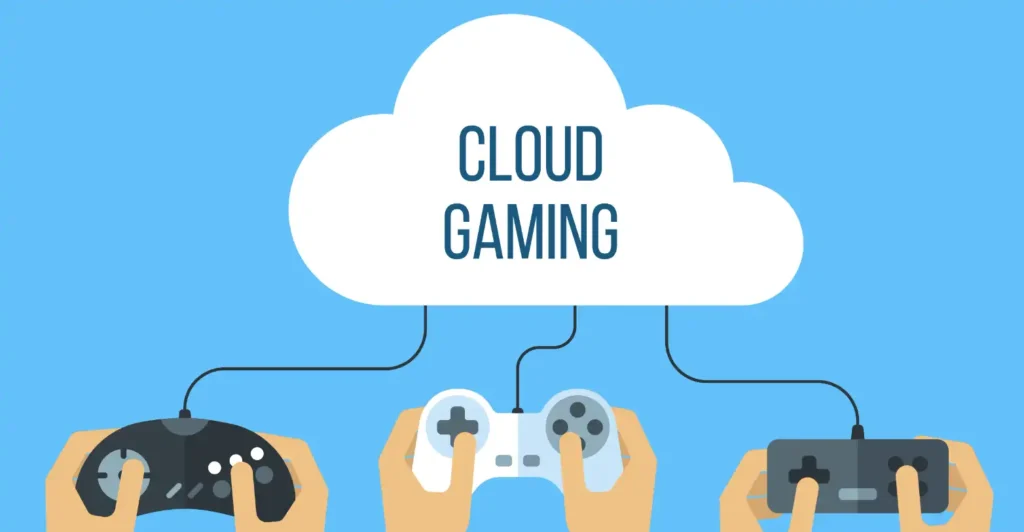
The basic principle is simple: instead of running the game on the player’s hardware, it runs on remote servers. The rendered image is compressed and streamed as video to the user’s device. Player inputs—keyboard presses, controller buttons, mouse movements—are sent back to the server, which processes them and updates the game state. This entire cycle happens dozens of times per second.
The core challenge lies in that cycle. Every time you press a button, the signal must travel to the server, be processed, and the result must come back to you. This round-trip time is what we call latency, and it has a physical limit determined by the speed of light and the distance between you and the server. With nearby servers and fast networks, latency can drop below 20 milliseconds—imperceptible for most games. The problem is that servers aren’t always nearby, and networks aren’t always ideal.
The main platforms and their approaches
NVIDIA’s GeForce Now is arguably the most technically mature cloud gaming platform. Instead of offering its own library, it acts as a cloud extension of your PC: you use games you already own on platforms like Steam and Epic, and GeForce Now runs them on high-end NVIDIA hardware. The service supports up to 4K resolution and 240fps on top-tier plans, including ray tracing. For players with large game libraries but no powerful PC, it’s a compelling solution.
Xbox Cloud Gaming (part of Game Pass Ultimate) has a clear strategic advantage: the Game Pass catalog, which includes Microsoft and Bethesda releases on day one. Integration with the Xbox ecosystem is a major strength—cloud saves, achievements, and friends work exactly as they do on console. Microsoft has been heavily investing in server infrastructure, with data centers across multiple regions to reduce latency.
PlayStation Now was reworked into PlayStation Plus in 2022, but Sony’s cloud gaming offering still lags behind competitors in terms of streaming quality and available catalog (a large portion is still download-only). Sony appears to be focusing more on a hybrid approach, where local hardware remains central to the experience.
Google Stadia, despite its ambitious vision and strong backing, was shut down in January 2023. Its failure is instructive: technically, the platform was solid—latency was good, image quality decent. The issue was strategic: lack of compelling exclusive content, questionable pricing, and confusing messaging about the business model alienated early adopters without ever reaching the mainstream.
The latency problem: what science and engineering can do
Reducing perceived latency is one of the most interesting engineering challenges in cloud gaming. NVIDIA developed a technology called NVIDIA Reflex which, combined with input prediction techniques, helps reduce the perceived delay. The idea is that for certain actions, the system can predict with high confidence what the player is about to do and apply the result locally before the server confirms it.
Another approach is hybrid rendering—processing parts of the game locally (like UI and certain visual effects) while heavy rendering happens in the cloud. This reduces perceived latency for critical interactions while preserving the visual quality of remote servers.
5G is often mentioned as a game-changer for mobile cloud gaming, and there’s some truth to that. Under ideal conditions, 5G offers significantly lower latency than 4G, along with higher bandwidth for better-quality streams. In practice, however, 5G coverage is still uneven—especially in countries like Brazil, where network infrastructure varies greatly by region.
Cloud gaming in Brazil: an uneven reality
Discussing cloud gaming without acknowledging Brazil’s context would be misleading. Brazil is a massive gaming market—the largest in Latin America and one of the biggest in the world—but its internet infrastructure remains deeply uneven. In major metropolitan areas with fiber connections, cloud gaming works reasonably well. In smaller cities with ADSL or lower-quality connections, the experience can be frustrating.
AWS, Azure, and Google Cloud all operate data centers in Brazil (mainly in São Paulo), which helps reduce latency in the Southeast. However, coverage in other regions often relies on longer routing paths that increase delay. For cloud gaming to truly democratize access to games in Brazil, investment in network infrastructure is just as important as technological advances from the platforms themselves.
What the future holds
Cloud gaming won’t replace local gaming overnight—and it may never fully replace it. But it will take up an increasingly important role, especially in situations where local play isn’t convenient—on mobile devices, TVs, or while traveling—and for casual players who don’t want (or can’t afford) high-end hardware. Competition between platforms is healthy and is driving rapid technical improvements.
The long-term success of cloud gaming depends on a mix of factors that aren’t entirely under the control of game companies: global network infrastructure, net neutrality regulation, internet pricing, and the willingness of publishers to embrace the model. In the end, the most decisive factor may be the same one that drives every successful streaming service: content. Whoever has the best games will win the players.